Getting to Know the Nipah Virus: A Simple Guide
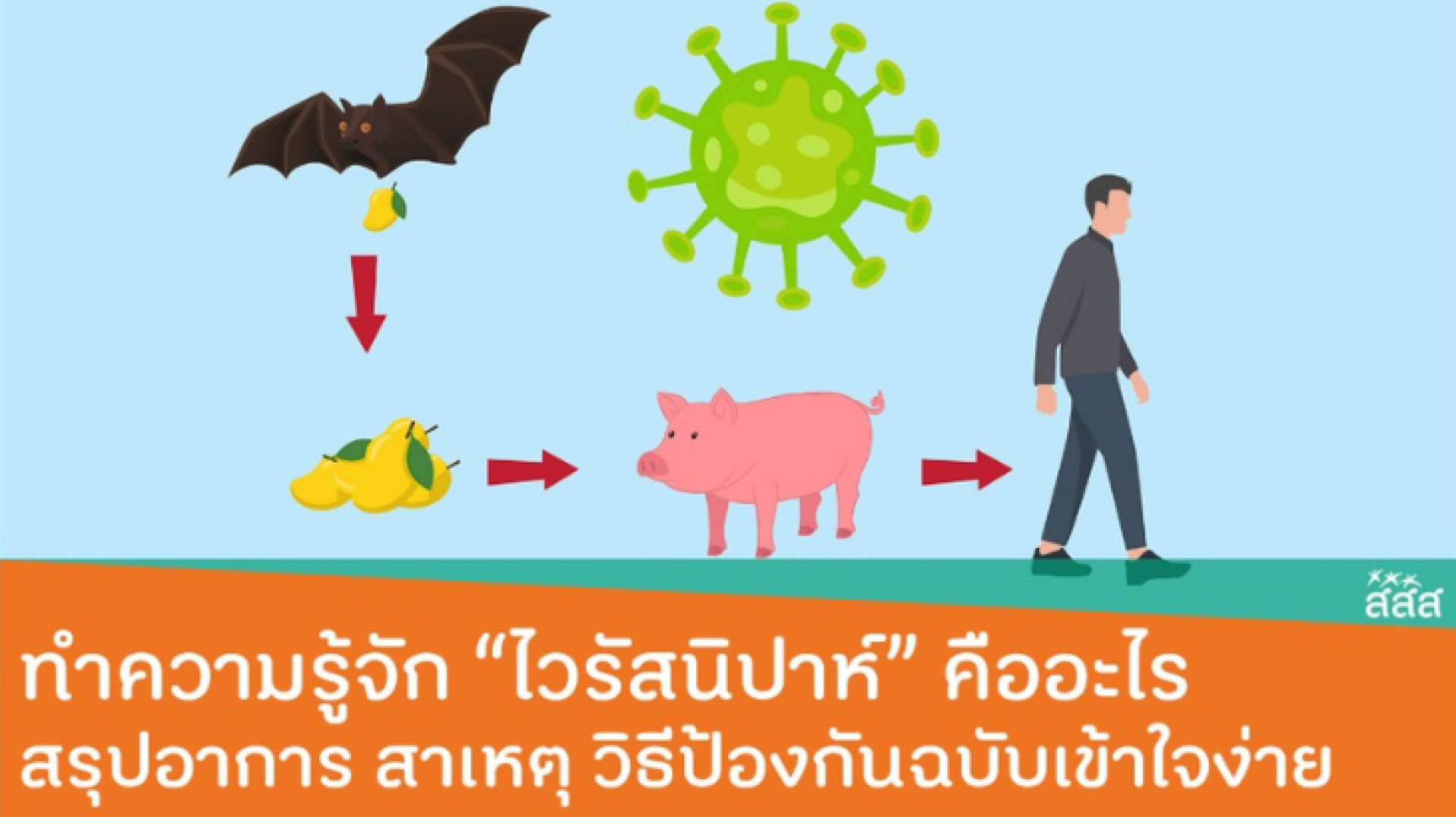
Get to Know Nipah Virus – A High-Fatality Zoonotic Disease Learn the early symptoms, causes of transmission from bats, and how to protect yourself according to public health standards.
What is Nipah Virus? Nipah virus (NiV) is a virus in the same family as the Hendra virus. It is classified as a zoonotic disease (transmitted from animals to humans) with high severity. It was first discovered in 1998 during an outbreak among pig farmers in Nipah village, Malaysia, which is the origin of its name.
The World Health Organization (WHO) has listed Nipah virus as one of the “priority diseases” due to its potential to cause large-scale outbreaks. Currently, there is no specific vaccine or targeted antiviral treatment available for humans.
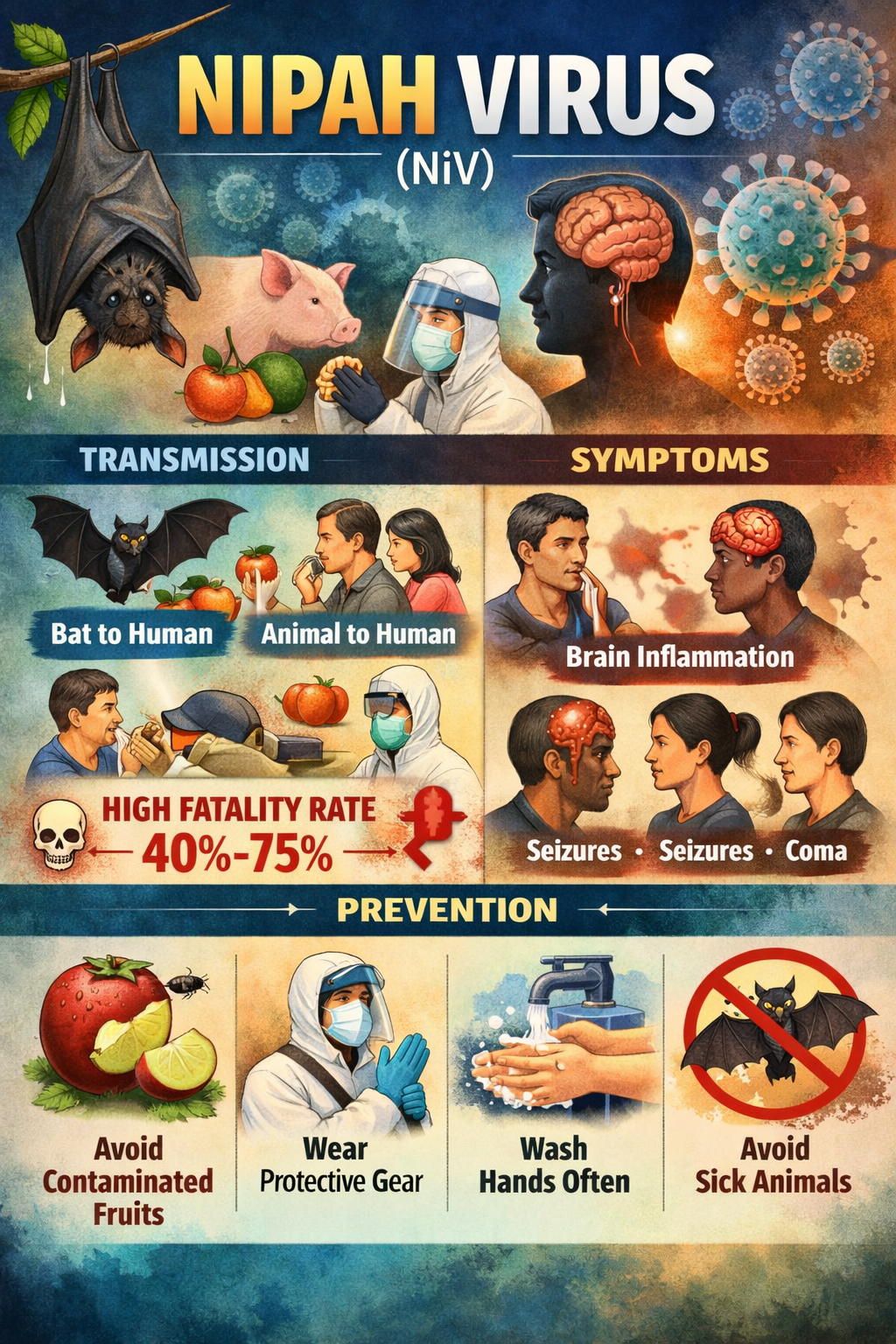
Causes and Transmission
The natural reservoir of Nipah virus is fruit bats, particularly flying foxes (Pteropus species). The virus lives in bats without causing illness, but it can be transmitted through bodily fluids such as saliva, urine, or feces.
Modes of Transmission
Animal to human: Direct contact with infected animals (such as pigs or bats), or consuming fruits contaminated with bat saliva or urine, such as palm fruits, coconuts, or partially eaten fruits.
Human to human: Close contact with bodily fluids of infected individuals, such as nasal secretions, saliva, or blood. This is commonly seen among caregivers or healthcare workers.
Contaminated food or drink: Drinking raw or improperly collected fruit juice that may be contaminated with bat secretions.
Nipah Virus Symptoms
How can you tell if you are infected? The incubation period is typically 4–14 days, but it may extend up to 45 days. Symptoms can be divided into several stages as follows:
- Early Symptoms (Flu-like)
- High fever, Headache
- Muscle aches
- Sore throat and vomiting
- Cough and shortness of breath
Severe Symptoms (Neurological involvement) If the infection progresses, it can lead to encephalitis (brain inflammation), with prominent symptoms including:
- Drowsiness, confusion, disorientation
- Seizures
- Loss of consciousness or coma within 24–48 hours
- Survivors may experience long-term neurological complications, such as personality changes or persistent seizures.
- The alarming aspect of Nipah virus infection is its high fatality rate, which can reach up to 75%.
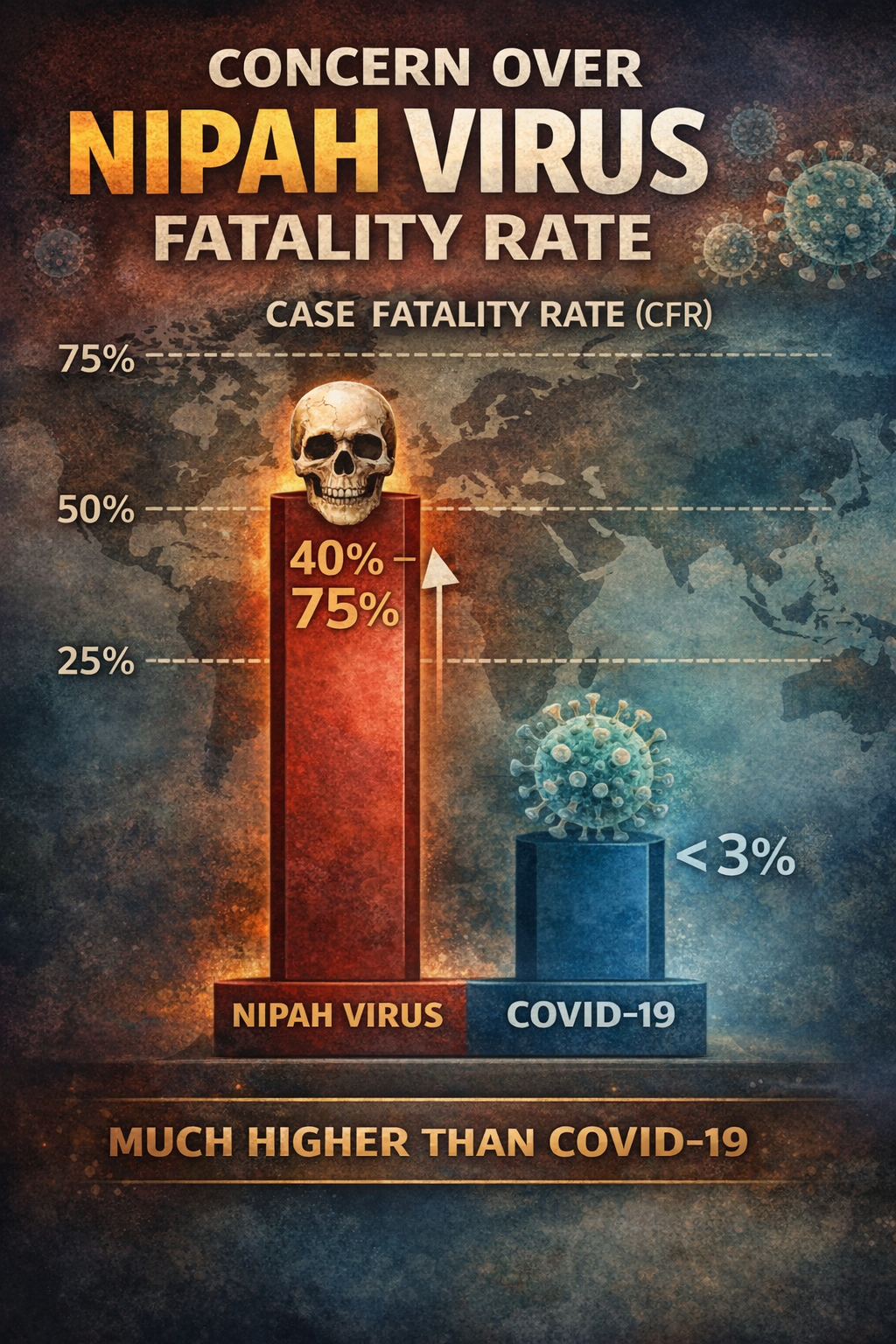
High Fatality Rate One of the most alarming aspects of Nipah virus is its severity. Outbreak data show a case fatality rate ranging from 40% to 75%, depending on the availability and quality of medical care. This is significantly higher than COVID-19.
Prevention and Self-Protection
- Currently, there is no vaccine available for humans. The best way to prevent infection is to reduce the risk of exposure.
- Avoid partially eaten fruits: Do not consume fruits that have been bitten or partially eaten by birds or bats.
- Wash fruits thoroughly: Rinse fruits carefully under running water before eating, or peel them.
- Avoid contact with sick animals: If it is necessary to handle pigs or bats, wear protective equipment such as gloves and a face mask.
- Maintain good personal hygiene: Wash your hands frequently with soap, especially before eating and after using the restroom.
Source: Thai Health Promotion Foundation (ThaiHealth)
https://www.thaihealth.or.th/